Blog

  • Three Bathroom Organizers

    Three Bathroom Organizers

    Expand your space

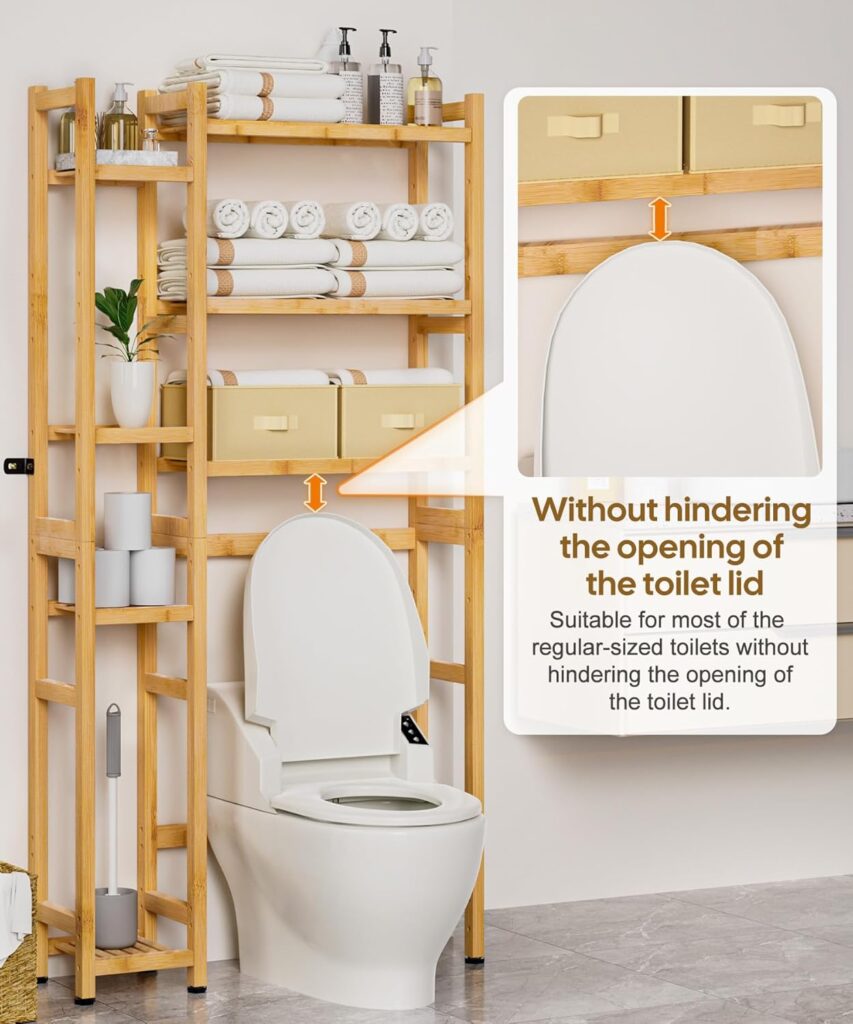
    Experience the gentle comfort of a clutter‑free bathroom with our bamboo over‑the‑toilet shelf. Crafted from smooth, PU‑finished bamboo, it offers a warm, natural look that invites calm while effortlessly supporting up to 220 lb. Its clever, space‑saving design fits most toilets without crowding the floor, leaving room for your feet and a breath of serenity. Seven open shelves and two soft‑fabric baskets provide graceful storage for towels, toiletries, and little luxuries, while adjustable shelves let you tailor the layout to your rhythm. Easy to assemble and stable on protective foot pads, this shelf turns everyday routines into moments of quiet satisfaction—making your bathroom not just a space, but a soothing retreat.

    Buy

    A Gentle Touch of Order for Your Bathroom

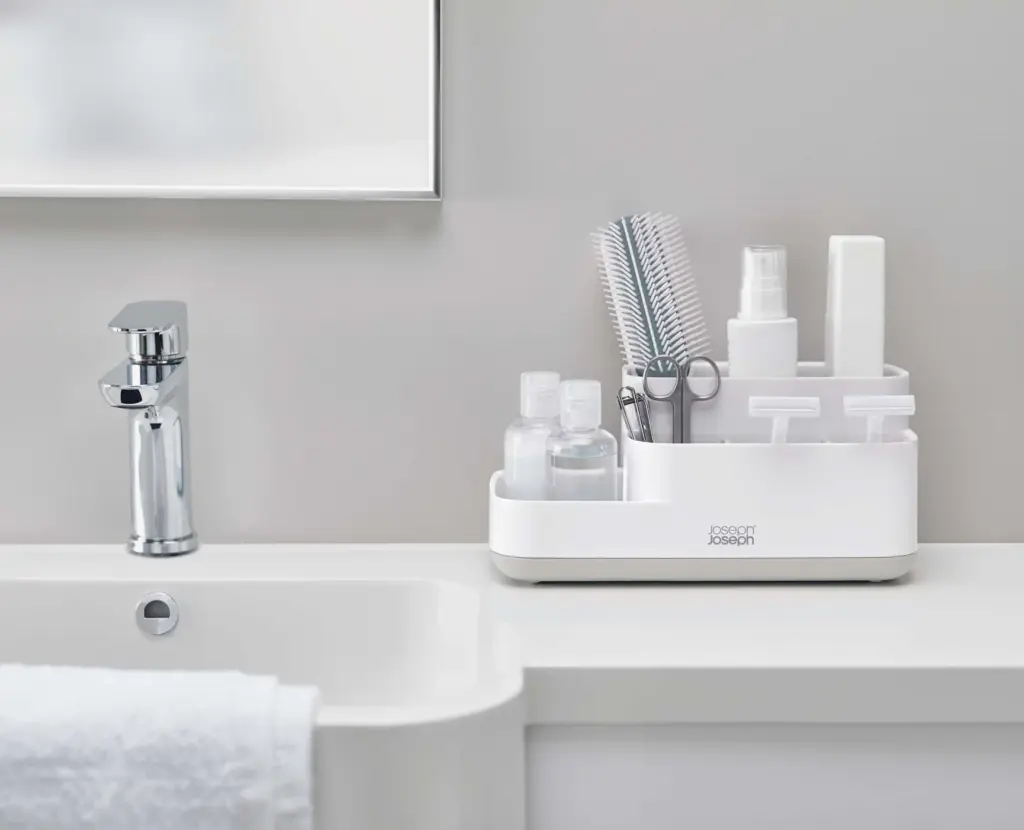
    Meet the bathroom caddy that turns everyday routines into quiet moments of ease. Its thoughtfully arranged compartments keep every grooming essential—brushes, creams, razors, and more—neatly in place, so you can find exactly what you need without a second‑guess.

    Buy

    Sturdy, Customizable Storage

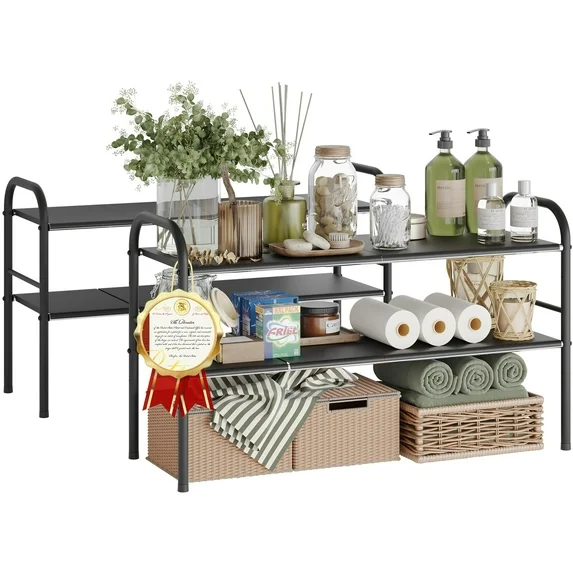
    A sturdy, metal under‑sink organizer that earns an 8.5/10 for durability and flexibility. Its adjustable height and length slide into any cabinet, while removable baskets make cleaning a breeze and let you customize the layout to fit your needs. At just $36.99, it turns a chaotic under‑sink space into a tidy, hassle‑free zone.

    Buy

  • The Productivity Payoff: Why an Organized Workspace Is Your Greatest Career Hack

    The Productivity Payoff: Why an Organized Workspace Is Your Greatest Career Hack

    In the modern workplace, we’re constantly searching for ways to boost efficiency and performance. While we invest in new software and time-management techniques, one of the most powerful productivity tools might be right in front of you: an organized desk. Far from being a simple matter of aesthetics, your workspace design directly influences your focus, decision-making, and overall output.

    The Science of Workplace Focus

    A cluttered workspace doesn’t just look messy; it forces your brain to work overtime. Researchers from the Princeton University Neuroscience Institute found that when your visual field is filled with multiple, disorganized objects, those objects compete for neural representation. In simple terms, the clutter on your desk is actively fighting for your brain’s attention, making it much harder to concentrate on a single task (McMains & Kastner, 2011). Every out-of-place paper, extra coffee mug, and tangled cord is a micro-distraction that drains your cognitive resources, leading to mental fatigue and a decrease in performance.

    How Your Desk Shapes Your Decisions

    Beyond focus, the state of your environment can subconsciously prime your behavior. A fascinating series of studies published in Psychological Science discovered that working in a clean and organized room encouraged people to make better choices. Participants in a tidy space were more likely to choose a healthy snack (an apple over a chocolate bar) and were more generous in a charity donation scenario (Vohs et al., 2013). This suggests that an orderly environment activates a mindset geared toward convention and making the “right” choice—a valuable trait for detail-oriented and analytical tasks.

    Interestingly, the same study found that a disorderly environment seemed to stimulate more creative thinking, as participants in a messy room generated more innovative ideas. This doesn’t mean you should trash your office for brainstorming. Rather, it highlights the importance of tailoring your environment to your task. For focused, high-stakes work, a clean space is non-negotiable.

    Creating Your Productive Space

    Ready to leverage your environment for success? Start with these simple steps:

    1. Clear your surfaces: Keep only the essential items for your current task within arm’s reach.
    2. Give everything a home: Use drawer organizers, folders, and labeled bins to store other items.
    3. Implement a “daily reset”: Spend the last five minutes of your workday tidying your desk. This ensures you start the next day with a clean slate, ready to focus and be productive.

    An organized workspace isn’t about rigid perfection. It’s a strategic tool for minimizing distractions, improving decision-making, and freeing up your mental energy to do your best work.

    References

    • McMains, S., & Kastner, S. (2011). Interactions of Top-Down and Bottom-Up Mechanisms in Human Visual Cortex. Journal of Neuroscience, 31(2), 587–597.
    • Vohs, K. D., Redden, J. P., & Rahinel, R. (2013). Physical Order Produces Healthy Choices, Generosity, and Conventionality, Whereas Disorder Produces Creativity. Psychological Science, 24(9), 1860–1867.
  • The Science of a Clear Mind: How Organization Transforms Your Mental Health

    The Science of a Clear Mind: How Organization Transforms Your Mental Health

    Have you ever noticed how a messy room can make you feel anxious, unfocused, or overwhelmed? That feeling isn’t just in your head. A growing body of research shows that our physical environments have a direct and measurable impact on our mental well-being. Clutter is more than just a physical nuisance; it’s a significant source of psychological stress.

    Your Brain on Clutter

    Your brain is constantly processing information from your surroundings. When your environment is cluttered, it creates an overload of visual stimuli that compete for your attention. Neuroscientists have found that this visual chaos makes it difficult for your brain to focus and process information effectively, limiting your cognitive resources (McMains & Kastner, 2011). This constant low-level distraction can leave you feeling drained, irritable, and mentally fatigued.

    More than just a distraction, clutter can actively elevate stress hormones. A landmark study found that women who described their homes as “cluttered” or full of “unfinished projects” had significantly higher levels of the stress hormone cortisol throughout the day compared to women who described their homes as “restful” and “restorative” (Saxbe & Repetti, 2010). Chronically elevated cortisol is linked to anxiety, depression, and difficulty coping with everyday stress. Other research has directly linked possession clutter to procrastination and lower life satisfaction, suggesting that our physical mess is often a reflection of, and contributor to, our mental state (Roster et al., 2016).

    Decluttering for Mental Clarity

    The act of decluttering is a powerful way to regain a sense of control and calm. By intentionally choosing what to keep, you are making decisive actions that can reduce the feelings of helplessness that often accompany a chaotic environment. The benefits are clear:

    • Reduced Anxiety and Stress: An organized space reduces visual noise and the constant “to-do” list that clutter represents, allowing your nervous system to relax (Saxbe & Repetti, 2010).
    • Improved Focus: With fewer distractions competing for your brain’s attention, you can dedicate more mental energy to the tasks that matter (McMains & Kastner, 2011).
    • Enhanced Mood: Taking control of your environment provides a sense of accomplishment and mastery, which can boost self-esteem and overall mood.

    You don’t need to overhaul your entire home at once. Start by clearing a single surface, like your kitchen counter or a desk. Experiencing the immediate mental relief of that one clear space can provide the motivation to continue, creating a calmer, more supportive environment for your mind.

    References

    • McMains, S., & Kastner, S. (2011). Interactions of Top-Down and Bottom-Up Mechanisms in Human Visual Cortex. Journal of Neuroscience, 31(2), 587–597.
    • Roster, C. A., Ferrari, J. R., & Jurkat, M. P. (2016). The dark side of home: Assessing possession ‘clutter’ on subjective well-being. Journal of Environmental Psychology, 46, 32-41.
    • Saxbe, D. E., & Repetti, R. L. (2010). No Place Like Home: Home Tours Correlate With Daily Patterns of Mood and Cortisol. Personality and Social Psychology Bulletin, 36(1), 71–81.

  • From Chaos to Calm: The Surprising Physical Health Benefits of an Organized Home

    From Chaos to Calm: The Surprising Physical Health Benefits of an Organized Home

    We often think of decluttering as a way to make our homes look better, but its most significant benefits may be invisible. The level of organization in your living space has a profound and scientifically-backed impact on your physical health, influencing everything from stress levels and sleep quality to your dietary choices.

    The Stress-Body Connection

    Your home environment can either be a sanctuary or a source of chronic stress. For many, clutter acts as a persistent, low-grade stressor. A study from UCLA’s Center on Everyday Lives of Families found a direct link between a high density of household objects and elevated levels of the stress hormone cortisol in female homeowners (Saxbe & Repetti, 2010).

    When cortisol levels are constantly high, your body remains in a “fight-or-flight” state. This can lead to serious physical health consequences over time, including a weakened immune system, increased inflammation, higher blood pressure, and digestive issues. By decluttering, you are actively reducing a major environmental stressor and giving your body a chance to return to a state of balance and calm.

    Organization for Better Sleep and Nutrition

    A chaotic environment doesn’t just stress your mind; it can sabotage your health goals. Research has shown that people in messy, chaotic kitchens are likely to eat more calories—specifically, they ate twice as many cookies as those in an organized kitchen (Anderson et al., 2017). The authors suggest that a chaotic environment can trigger a stressed, “out-of-control” mindset that leads to poor food choices.

    Your bedroom is another critical health zone. The National Sleep Foundation has long advocated for a cool, dark, and quiet bedroom, but organization is a key—and often overlooked—component of good sleep hygiene. Clutter can act as a visual reminder of unfinished tasks, leading to mental arousal that makes it difficult to fall asleep and stay asleep. A 2012 poll by the foundation found that people who make their beds every morning were 19% more likely to report getting a good night’s sleep regularly. This simple act of organization helps set the stage for a restful night.

    By creating an organized home, you are building an environment that supports, rather than undermines, your physical health. Starting with the two most important zones—the kitchen and the bedroom—can lead to lower stress, better food choices, and more restorative sleep.

    References

    • Anderson, C., John, A., Tankard, M. E., & Wansink, B. (2017). Clutter, chaos, and overconsumption: The role of mind-set in stressful and chaotic food environments. Environment and Behavior, 49(2), 223-241.
    • National Sleep Foundation. (2012). 2012 Bedroom Poll. Retrieved from https://www.sleepfoundation.org/wp-content/uploads/2018/10/2012-bedroom-poll-summary-of-findings.pdf
    • Saxbe, D. E., & Repetti, R. L. (2010). No Place Like Home: Home Tours Correlate With Daily Patterns of Mood and Cortisol. Personality and Social Psychology Bulletin, 36(1), 71–81.